Synchronization with mismatched synaptic delays: A unique role of elastic neuronal latency
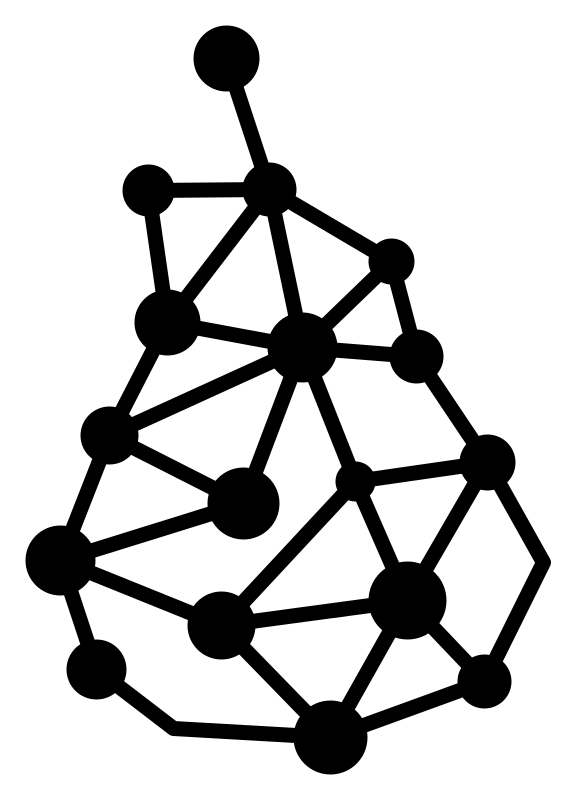
We show that the unavoidable increase in neuronal response latency to ongoing stimulation serves as a nonuniform gradual stretching of neuronal circuit delay loops and emerges as an essential mechanism in the formation of various types of neuronal timers. Synchronization emerges as a transient phenomenon without predefined precise matched synaptic delays. These findings are described in an experimental procedure where conditioned stimulations were enforced on a circuit of neurons embedded within a large-scale network of cortical cells in-vitro, and are corroborated by neuronal simulations. They evidence a new cortical timescale based on tens of microseconds stretching of neuronal circuit delay loops per spike, and with realistic delays of a few milliseconds, synchronization emerges for a finite fraction of neuronal circuit delays.